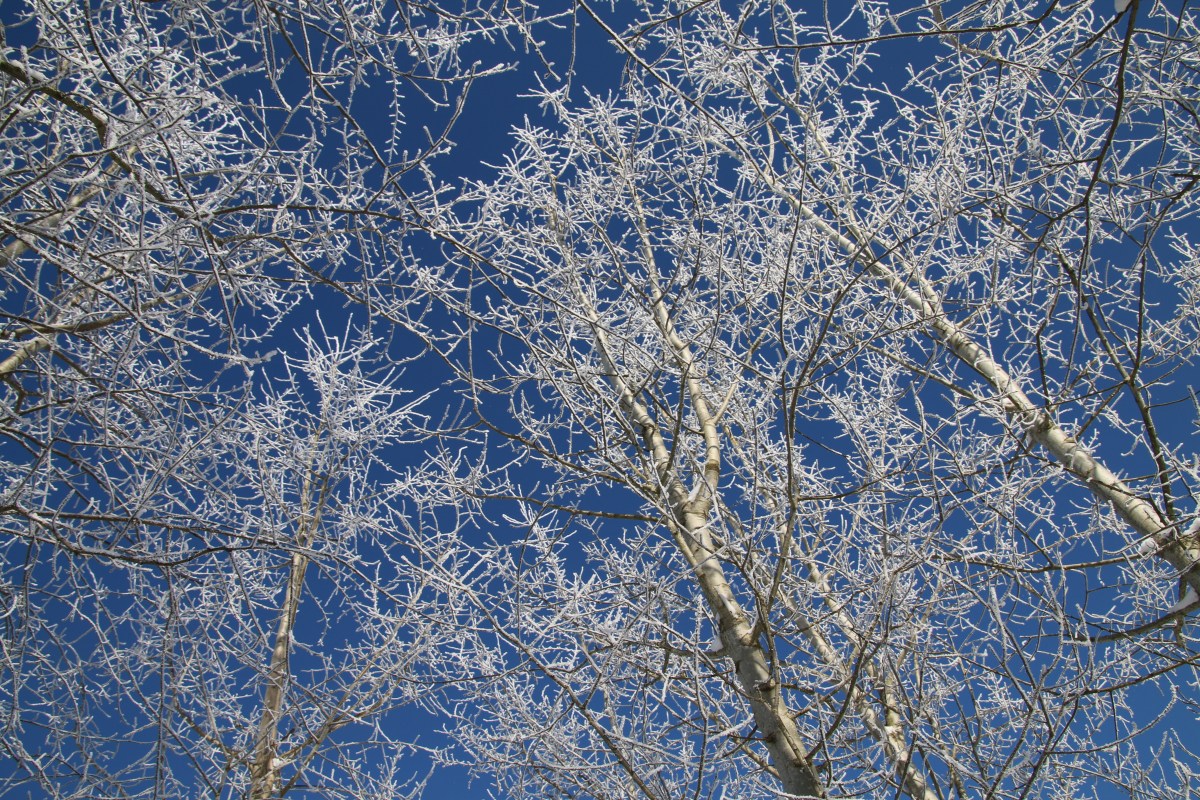
Snow! days . . .

The Pacific Northwest receives snow about every year.  Most of the time, we in the coastal lowlands get maybe an inch or two, which lasts a day or two.  However, further inland, as you rise in elevation and climb the Cascade Mountains, snow packs are measured in feet and can last until summer.  Overall, it’s a wonderful combination.  You can have your snow and leave it too.

Then came February 2019 and everything changed.  Snow fell and stayed.  Snow fell again, and again, and what was inches nearly approached a foot.  Businesses closed, school closed, and for a few days, the world around us was a lot quieter.

At first we were all giddy with “No school!”  Days were spent frolicking in the fresh powder.  Sledding, snowman building, walks, and general appreciation of the winter beauty (It’s as if snow seems to changed our point of view, it adds a layer of exotic to an otherwise mundane scene).  Yet the novelty is short lived; especially for adults, who are accustomed to kids in school, routine, and clear roads.  We say, “enough is enough,” and surprisingly long for a day at work and things “back to normal.”  Eventually it does, and what seemed like forever is but a wisp of time, and later, a story of “remember when . . .”

We are fortunate.

Now, as a disclaimer, I do not make light of the hardships this weather, or of  any extreme weather affecting humans on the planet.  Rather, I wish to exhibit how this snow shocked some of the wild things around the farm, and how that change is a life or death situation.

Specifically, the inches of snow was traumatic for small, ground birds like the Spotted Towhee, the Song, Golden-Crowned, and White-Crowned Sparrows, Oregon Junco, Western Meadowlark, American Woodcock, and American Robin.  These critters had their world erased.  Literally overnight, the all-you-can-eat-buffet closed, their homes were buried, and they were black spotted in a white world where every creature who wanted to eat them had a much easier time doing it.

Due to this constriction of habitat, the birds of my yard were restricted to the bare patches of ground or concrete that exist underneath barns, sheds, or trailers.  They tried scratching and pecking at the bare earth or manure pile in hopes of finding some sustenance.  This, in turn, concentrated their numbers in small spaces making them more vulnerable to predators like barn cats, coyotes, and hawks.  Moreover, birds like the Western Meadowlark that visited the manure barn were completely out of their element and thus, less likely to forage and perceive danger.
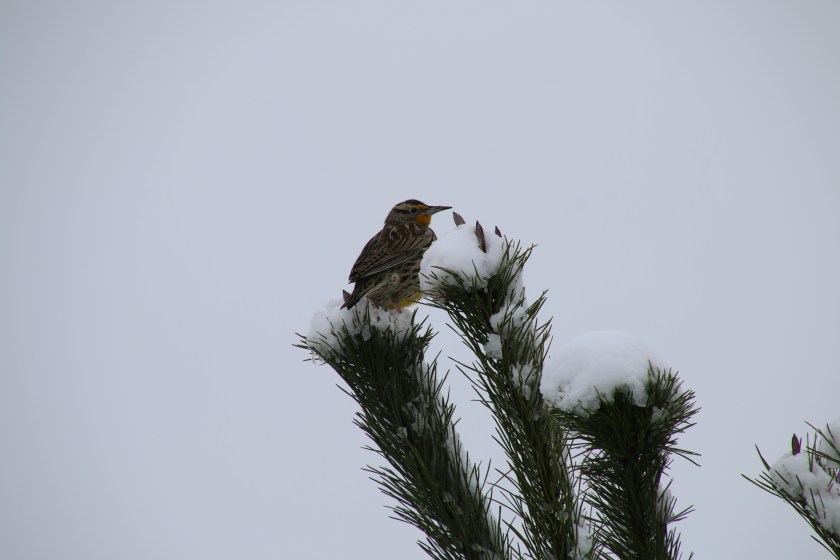
IMG_4588.jpg

We take for granted the idea that animals have adapted to nature and they know how to survive, yet longevity in songbirds isn’t that long.  Given that the average backyard bird lives between 2-5 years, it is very likely that most of the birds I observed this winter had never seen a snow fall like this one.  Frankly, they were not prepared.  This fact dawned on me, or landed on me, as I stood in the yard and had a Junco alight on my head.  I was Snow White for a second!  Surprisingly, it wasn’t my charm that drew it, but the complete disorientation it felt in the snow.

To be fair, the snow cover wasn’t complete chaos for all living things.  Ground dwelling mammals, like mice, voles, moles, and shrews probably cherished the extra protection afforded by a layer of snow.  They were able to explore, scavenge, and range about in the shrubs and grasses under a protective roof of white while hungry eyes above could not see them.  Coyotes, owls, and hawks can hear their goings-on, but the signature pounce takes practice, and rarely do these predators have to work through a medium like snow.

IMG_6695.jpg

Notice how this rodent was able to tunnel into open grass.  Normally, such exposure would be folly and equal a quick end.  It will be interesting to see if a couple of weeks of reduced winter predation will translate into more voles this summer?

It is mid March now, the only snow left is where I piled a bunch with the tractor.  It too will dissolve–probably today, yet other signs of February’s snow remain.  As I walked the fields this morning, it was evident that a great iron had smoothed out the wrinkles and compressed the dry grasses into a mat.  Everything looks depressed and broken from winter’s weight.

Alas, spring is here.  I unplugged the livestock trough heater this past week and a new calf was born Monday.  Also, the white foot hills in the distance are returning to green as the snow at lower elevations melts with the coming warmth.  By the beginning of next week, where temperatures may reach 70 degrees Fahrenheit, the river might run high with the sudden surge of runoff.  Hopefully, it stays put and we can get to work on the garden, the fields, and the barns (Where all those blasted Starlings and House Sparrow survivors are trying to make nests!).  Until next time.

IMG_7157.jpg


The Hedgerow

I support building a wall.  Plant it along a border or a property line.  Something dense and high to keep illegals out and the right kind of citizens in.  It doesn’t have to be terribly thick.  Just enough to keep the winds of change from reaping your fields of plenty, yet it should be stout and strong so the residents feel secure and at peace.

I also recommend getting someone else to pay for it.  Try another government institution or an organization that cares and caters to the needs of all the other organisms on earth: the silent majority.  They’ll help you design, build, pay for, and maintain the wall.  A sweet deal.  Mutual benefit and you don’t have to worry about a thing.  You support me and I’ll line the pockets of your land.

Sounds to good to be true?  Is this just another fictional story concocted by the media in order drum up support for clean air, water, and soil?  No, it’s real.  There is a mile of wall already planted and it works!

Due to the sensitive nature of what is truly at work on the wall we of the politically correct disposition call it a “Hedgerow”.  Some liberal term adopted by the Europeans, but it stuck.  Before that, it turns out, Neolithic People from the country of New Stone (good people) used hedges to protect their fields of cereal grains–I love cereal.

Now, let me tell you why this wall is so ingenious.  The Hedgerow is kind of like putting your name on what’s MINE and, let’s say: what’s not.  For instance, I have this great orchard–beautiful orchard–full of trees, and then there’s this barn stacked with dead grass–they call it hay–and there’s this ugly pile of horse droppings.  It’s ugly, nobody wants to look at it.  This wall of plants hides what I don’t want to see.  I like that.

Plus, you can sell it.  “Build it and they will come,” that’s what I say.  All my Hedgerows are at capacity: No Vacancy.  What’s best is they’re full of respectable characters who work for me and I don’t even have to pay them–even better.

Take the mason bee and honeybee, some of the best creatures, tirelessly pollinating the apples, pears, nut trees, and all my other stuff.  When they aren’t working for me, I keep them busy in the Hedgerow pollinating other pretty flowers like Red-Osier Dogwood, Oregon-grape, Black Twinberry, Crabapple–you get it.  Couldn’t do it without them.

Then there’s the birds.  Sparrows, jays, finches, juncos, chickadees, siskin, towhee, hawks, owls, and an occasional Pheasant–you can hunt those, great game bird.  They use this Hedgerow too, call it Habitat.  I’m ok with that.  It’s like the same thing.

We do, however, have some intruders taking advantage of the system.  The meadow vole, rabbits, beaver, and deer abuse the Hedgerow and they’re not paying for it.  What’s worse, they steal from the orchard, commit vandalism, and even murder.  This isn’t my fault, but some policy I inherited from the former farmer.   No need to worry.  We’re working on it.  Some the brightest high school students are implementing ways of making these transients feel unwelcome.

You want to talk about invasive species?  I know, there’s the Himalayan Blackberry, nasty weed with a tasty berry.  These thorny devils infest all my borders.  We implemented a no-fly order and farm shutdown to keep the birds from spreading the seeds–it didn’t work; they wouldn’t listen.  Seems they needed to keep flying in order to do their job.  Well, just another example of the problems that were dropped on this farmer’s lap.

Lastly, I want to say, despite the hiccups that were incorporated into my wall, which were not my fault, it’s a huge success.  Hedgerows are a boon to the plants and animals, organization, beauty, and health of the farm economy.  They are so awesome they even support the global economy.  By building this wall, the rest of the world can feel safer with cleaner water, air, soil, and biodiversity.

Now, if any other property owners wish to take my lead and build themselves a Hedgerow, please visit the sites below and visit your local conservation district, department of natural resources, soil conservation service, or whatever government/non-government agency nearby that is full of really smart, helpful, good people.


https://www.arborday.org/trees/privacyhedge/

http://www.hedgelink.org.uk

https://snohomishcd.org/blog/2017/7/17/go-native-with-hedgerows-and-buffers-on-horse-properties

https://www.tenthacrefarm.com/how-to-plant-a-hedgerow/


A New Year

A year ago I started this website.  The idea to write about farming and the natural environment, while incorporating personal photos and images from the internet, was a spin off from a PhotoVoice group I contributed too.  That project was created by the Snohomish Conservation District, and their goal was to highlight the changing importance of agricultural land and its resilience in Snohomish County through photographs and accompanying captions.

Overall, the enterprise was a success.  Community land owners and small farmers expressed their views and concerns through the lens of a smartphone or camera, and their words and photographs traveled the county to be exhibited in public functions, libraries, and government offices.  Moreover, some members got active and now serve on their local Ag committees, farmer’s bureau, and Conservation District boards.

And others . . .  Started an open air journal with hopes that someone found it interesting.

In reality, the concept to create a Snohomish County Almanac has festered since I first sat on a tractor (for long dull hours) to make hay.  You see, in tractor farming there is just the right amount of thinking and boredom to keep you in a mind wandering muse.  Often I mentally float between the focus of cutting, tedding, raking, and baling hay; and curiosity about a hovering Red-Tail, an overabundance of grasshoppers, the presence of weeds, developing clouds, grazing cattle, and what can I do about this bumpy, back-breaking field?  Naturally, like the rest of our selfie-driven society I ventured the question: What if I shared my day dreaming with everyone on the World Wide Web?

Thus, this Almanac was born.  Initially, it was not my intent to copy the outline of Aldo Leopold’s work, yet the monthly pacing of Sand County lent itself well to my goal of a post a month.  Furthermore, the topics and points-of-view Leopold adopted gave me a guide to direct my sights for comparisons and contrasts between his world of early 20th century, Wisconsin, Professor/Outdoorsman/Conservationist, and my early 21st century, Washington, Farmer/Environmentalist/Conservationist.

Therefore, A Snohomish County Almanac is more of a record of what was through the eyes of an individual.  Obvious as this seems, it requires stating because this writer value’s his work as a piece of history.  Of course, I hope it’s entertaining too, yet like Leopold’s Sand County I want it to have a lasting quality, or at least reflect what and who was here, and what they thought before the 22nd century.

If we get there?  Most likely, my farm will not.  Even if the buildings outlast decades of flooding, subsidence, and bureaucratic pressure, the land will surely be different and perhaps not even be land.  Yet before this apocalyptic vision inundates our acreage, we will lose life incrementally.   What was, will no longer be, but who will be the wiser if we never knew?  Which is not to say I want to indulge in mere nostalgia for its own sake.  Records, in the form of stories, photos, journals, experiments, books, etc, are insights into your own unknown.  They can be a call to action.

For instance, coyotes have adapted to human development very successfully.  I have witnessed them in broad daylight on the streets of Seattle, and there are a few family packs in the surrounding valley.  Where I grew up in SE Minnesota there were Coyotes and there were Red Fox and Grey Fox and further north there were Grey Wolves.  Since living here in Washington, I have wondered where are the foxes?  It seems to me, that Snohomish County would have adequate habitat for fox, however, I have never seen one.  Well, about a month ago I was at an agriculture meeting when a fellow land owner, (from up on the Stillaguamish River in north Snohomish County), mentioned how, in the seventies, he would see Red Fox, but had not seen one since.

Where did they go?  What happened?  He guessed that maybe the coyote had driven them out.  We say, “Hmmm, isn’t that interesting,” and leave it at that.  Not exactly, I may not have time to track down where the Red Fox have gone, but someone might and here is a record.

Perhaps in the future more records will surface, (If so, please relate them in comments, or start your own journal.) and researchers will discover if or why the Red Fox has disappeared from Snohomish County.  From there, we might be able to reintroduce the fox and adopt management tools that aid in its survival.

Or, we can forget and deny it was ever that way because: We did not even like it when they weren’t here in the first place.  (Confused?  I throw in this little anecdote since it is how some land owners act when confronted with whether or not salmon are in our waterways, or whether wolves roamed before ranchers.)

We have to start somewhere.  Snohomish County Almanac is my small push to get the ball rolling.  I hope it is a living record to the Red Fox or Pacific Salmon and not a monument like the Passenger Pigeon was to Leopold.

With that in mind, I will leave you with the beginning excerpt from Aldo Leopold’s, “On a Monument to a Pigeon”.

We meet here to commemorate the death of a species. This monument symbolizes our sorrow. We grieve because no living man will see again the onrushing phalanx of victorious birds, sweeping a path for spring across the March skies, chasing the defeated winter from all the woods and prairies of Wisconsin.

Men still live who, in their youth, remember pigeons; trees still live that, in their youth, were shaken by a living wind. But a few decades hence only the oldest oaks will remember, and at long last only the hills will know.

There will always be pigeons in books and in museums, but these are effigies and images, dead to all hardships and to all delights. Book-pigeons cannot dive out of a cloud to make the deer run for cover, nor clap their wings in thunderous applause of mast-laden woods. They know no urge of seasons; they feel no kiss of sun, no lash of wind and weather; they live forever by not living at all.

Passenger-Pigeon-plaque_330x430.jpg

For the full essay visit: https://www.birdwatchingdaily.com/news/conservation/monument-pigeon-aldo-leopold/

You can also check out more on the PhotoVoice project at: https://snohomishcd.org/blog/2017/7/10/photovoice-for-agricultural-resilience-farmers-educate-decision-makers-through-photos?rq=photovoice


December

In last month’s post, November, I walked the farm.  A circuitous route that begins at a barn, follows a fence line, enters a small wood which borders a hay field, and then exits the forest into the field and eventually back to the barn and beyond to the river.  The trail is not long, about a mile, and it lacks any definite topography.  The only peak is a dike created by the Army Corp to contain the river.

Although the farm captures some of the biological richness of our region, it is far from the full reality that is Snohomish County.  Over two thousand square miles make up the county.  With the Sun rising above the Cascade Range of its eastern border, and then setting on the west coast of the Puget Sound, it is one of the most environmentally, geographically, and geologically diverse places on the planet.

To reiterate a passage from my very first post, to say this is a Snohomish County almanac is misleading.  I never intended to represent such a vast area, nor did I claim–or expect–to fully understand my small lot.  Rather, it was a start.  For me, the hard part of a hike is getting out the door with your boots on, but once that’s accomplished we’re ready for new experiences and adventures.

Obviously, much is left for me to explore and understand on my farm and in the county.  For future posts, I hope to venture beyond my Home Range and include observations and thoughts from different locations, ecosystems, and farms.  In A Sand County ALMANAC, Leopold referred to Part II as:  Sketches Here and There.  

Fitting.


November

November is a time of withdrawal.  Merriam-Webster’s summation of the word alludes to my feelings of the month.

Withdrawal: 1)  the act of taking back or away something that has been granted or possessed: 2)  retreat or retirement especially into a more secluded or less exposed place or position

As the sun sinks lower and lower to the southern horizon, I repent for my sinful whispers to see less of it in the summer.  This repossession of what was taken for granted forces me to look inward.  Wishing to be like that lazy mouse in the children’s book Frederick, I try to remember flowers, warmth, and energy that comes with ample Vitamin D. I fear, however, that I gathered too much grass and not enough Sun.

18569971._SX540_

The cows appreciate my harvest though.  I tried poetry night in the barn, but the bovines were more interested in hay, salt, water, and constantly harassing each other.  I have a naive idea that only my cows don’t get along.  They’re like kids; and every time I see one gore another for a better slice of leaf, or body-check a sibling into the wall for being too close and not moving fast enough, I think my cows are the worst, while those in other barns contently eat hay and simply snuggle.

Well tough, in the barn they must stay: retirement into a more secluded and less exposed space.  Not that these hairy beasts mind the wind and weather.  To the contrary, Scottish Highland Cattle seem to love cold or blowing rain.  If given the option, you’ll find them in the fields and never inside during inclement weather.  (They’re more likely indoors during intense heat and sun.)  There in lies their sully attitude; they don’t want to be cooped up.

IMG_4707.jpg

What needs a respite in November is the land.  All summer the earth was trampled by hoof and tractor tire.  Now, it get’s a break to replenish and rebuild with all the workings of things that are beautiful and beneath me.

For my boots still compress the soil.  I justify my Frederick farmer guilt with the saying, “The best fertilizer is the footprint of the farmer.”  That’s right, while you’re stuck in traffic I’m busy fertilizing my fields.  Early morning wanderings out into the hay fields and into the twelve hundred or so trees that make up our Conservation Reserve Enhancement Program or CREP buffer.  This thin line of forest diversity and vertical vegetation frames our northern border.  It also shades and filters a small waterway which is adjacent to it. (And home to a beloved beaver. Be sure to check out April 2018 if beavers are your thing.)

The CREP buffer is a secluded place.  Withdrawal into it is a time for observation and reflection.  Often, no matter the season, the space is like a naturalist/farmer’s car wash.  You enter one end muddled or drained from all the mooing and manure, and then, (out across the hay field and far from the sight and sound of what you should be doing), you come out fresh and revitalized.  Notwithstanding the calm of decreasing distraction, there is a spatial tranquility to the space.  Where forest meets field, the concept of Prospect and Refuge takes place.  Frank Lloyd Wright made exquisite use of this intuition.  His buildings are imbued with primal peace and excitement of early humans exiting the cave.

e56e9361-f57f-41c4-8542-bd4e0123a4fe
Found on http://www.architect.com

Ecologists and wildlife biologists recognize the benefits of these habitats as edge effects, or areas where animals have the prospect of food and the refuge of shelter.  The greatest farm species diversity and activity falls within this zone.  You can witness the exchange of life as birds, insects, and mammals make short forays out into grassland only to retreat back to the safety of a branch or bush.  The Song Sparrow is the most common tree and turf bouncer.  It chirps and scampers from the tall, dried stalks of grass to the lower limbs of alders as I pass.

Although I haven’t seen them of late, tracks tell that the coyote prefers the mown paths along the forest edge too.  In some areas the route is well worn.   Occasionally, it detours into the prarie and I follow the light paw prints to where a vole hole or mole hill is excavated.  This time, I wish the trickster all success.


In the open field, prospect is an advantageous, yet dangerous game.  Here, the American Woodcock and Savannah Sparrow find shelter within tractor tire ruts and folded clumps of fescue.  Later in the winter, flocks of Western Meadowlark will also peruse the Poaceae; their gargling and melodious song seeming to alight from nowhere.  Now, what we hear are vast armadas of Snow Geese.  Arrow upon arrow of the V-formation flocks pass up our welcoming fields for others who can’t stand them.  Apparently, the geese consume a large percentage of the dairy farmer’s hay cuttings.  For me, I would count it a blessing.  Not just to have the birds grace my farm, but also the first cutting of hay is a risky business.  Usually the fields and weather are too wet in the spring so I end up cutting in summer when the grass is stemming and gone to seed.  A Snow Goose feeding could be a good stunt.  Unfortunately, I’ll never know unless I can figure out a way to get  a thousand geese to land in spite of the power lines.

On a full circuit of the farm I always conclude with a stop at the river.  Here is our most dynamic edge and arguably the most diverse.  Home, road, and river all converge within less than a 100 foot strip of land.  The banks are steep due to flooding and tidal influences.  We have crayfish, salmon, kingfisher, bald eagle, cormorant, merganser, mink, river otter, deer, coyote, and yes, beaver all along the shore.  Once in a while a harbor seal makes the ten mile journey from Puget Sound.  It’s exciting to see this exotic mammal out of its usual habitat.  I often wonder what it thinks of this foreign and fresh water, and what drives it so far upstream?  Is it the possibility of easy fishing or a respite from the crowded waters of Puget Sound?

Whatever it may be, take some time this season to withdraw to a comfortable place, be like Frederick, that good-for-nothing solar sponge, and reminisce on lighter times.


Listen to all the traffic.  We’re too close to the flyway.